The Sound of a Country Dividing: A Critical Analysis of I'm Afraid of Americans
By Tom Cash - Posted Jan 15, 2026
EDITOR'S NOTE: This article contains imagery and themes that some may find upsetting or offensive. Please proceed with discretion.
We live in dark times. If you are a United States citizen, there's a good chance you aren't on speaking terms with most of your neighbors. You may not even remember their names.
It wasn't always that way.
At some point in my life, I went from knowing everybody in my neighborhood to occasionally nodding and waving at the couple next door. And I'm not alone. Something like 12% of US citizens do not know any of their neighbors, while a whopping 62% only know some of their neighbors. I fall into that category. Maybe you do, too. It seems as though some sort of latent dread has permeated everything, subtly warping our perceptions.
In 1995, David Bowie and Trent Reznor met and made tentative plans to collaborate in the future. Shortly after, Bowie's album Outside was released. While not at all influenced by Reznor, the similarities to mid-90s Nine Inch Nails are unmistakable. It was so compatible, in fact that Reznor remixed The Heart's Filthy Lesson, turning it into a crunchy, menacing industrial dirge, fraught with paranoia.
On the topic of paranoia, I'm Afraid of Americans is essentially a love letter to the emotion. Originally released in early 1997 on the album Earthling, it was later remixed by Reznor, producing the heavily industrialized version most of us know (see the bottom of this article for the video).
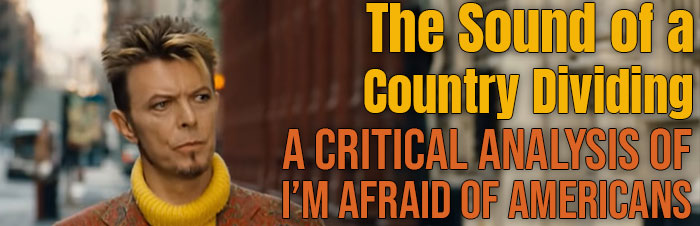
The video starts on a busy city street. Bowie is reading a newspaper, his posture: perfect, his clothing: immaculate. Some instinct causes him to turn his head, to find a creepy guy (Reznor) leering at him. He decides to move on, but Reznor follows.
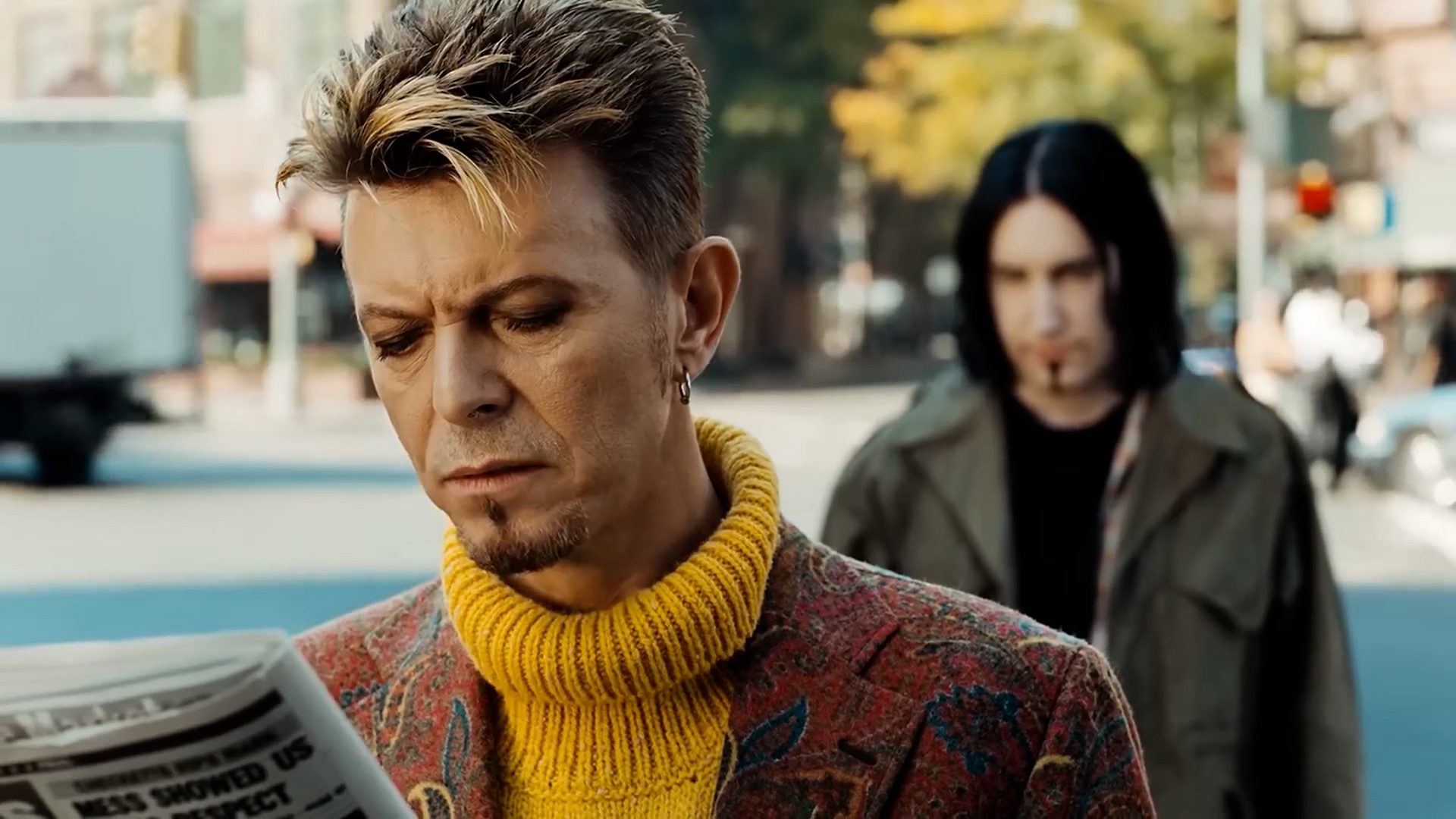
Concerned, Bowie rolls his newspaper tightly in his hands, no doubt hoping to use it to bludgeon his stalker if need be. But when it becomes clear this is no mere following, but something more sinister, he drops his makeshift weapon and breaks into a run.
Finally able to outrun Reznor, he finds himself in a different part of town. As he tries to soothe his frazzled nerves, he begins to notice people staring at him. This culminates in a priest inexplicably shooting a police officer in the back of the head point-blank. With a finger gun.
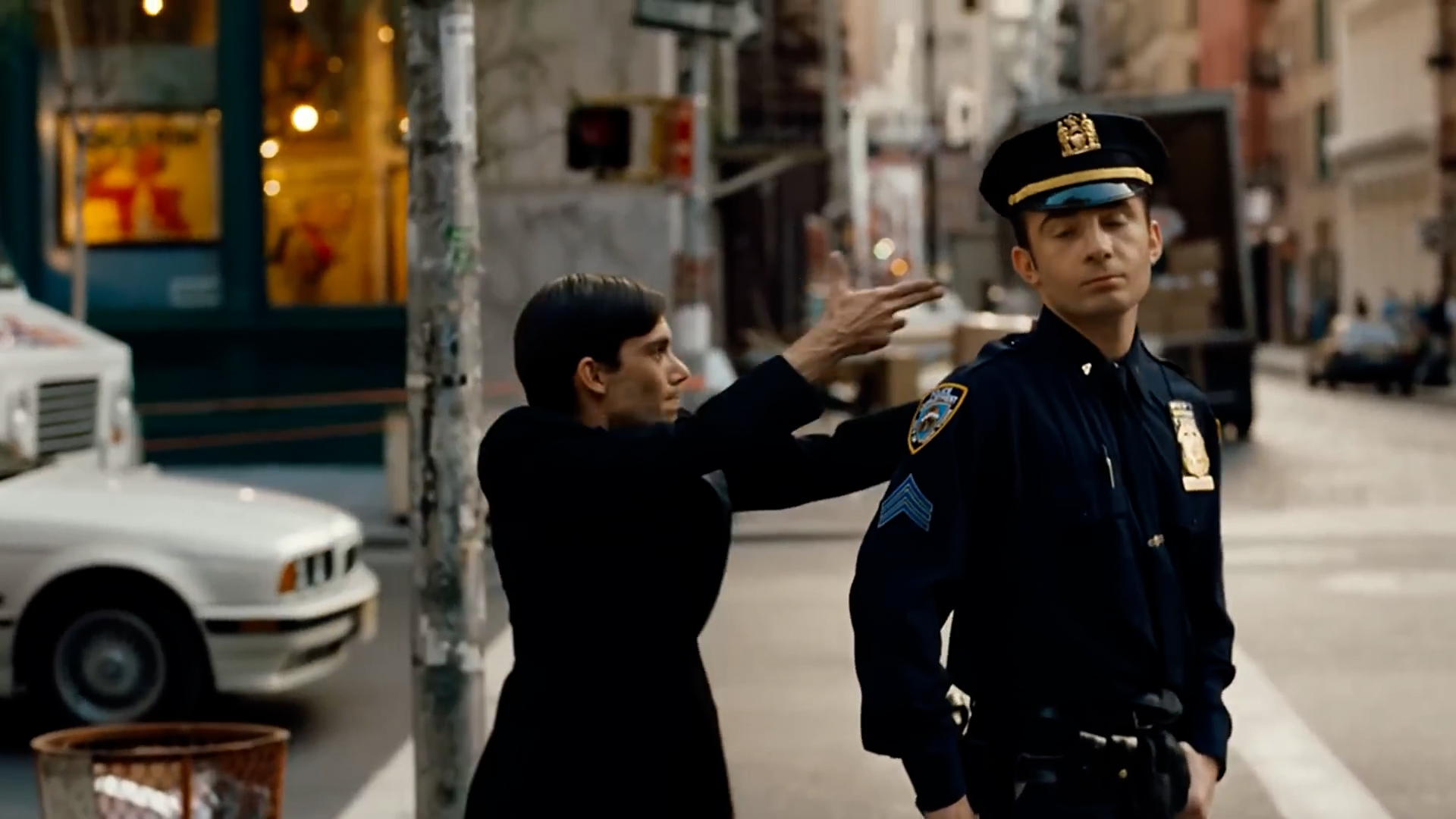
As Bowie runs away in the opposite direction, the cop and the priest are utterly nonplussed. What was happening to this man?
More acts of imaginary violence surround him as he runs down the sidewalk, and in no time, Reznor is behind him again, and closing in fast. Desperate, Bowie dives into a cab, and they speed away into the darkening evening.
In the cab, Bowie is interrogating what he just experienced. Was had just happened? Was any of it real? He laughs, maybe at the situation, maybe at himself for having acted the way he did. But when he realizes that the taxi driver is none other than the man who was chasing him all along, the mood shifts dramatically. Anxiety transforms into cold panic as Bowie screams to be released from the back of the cab.
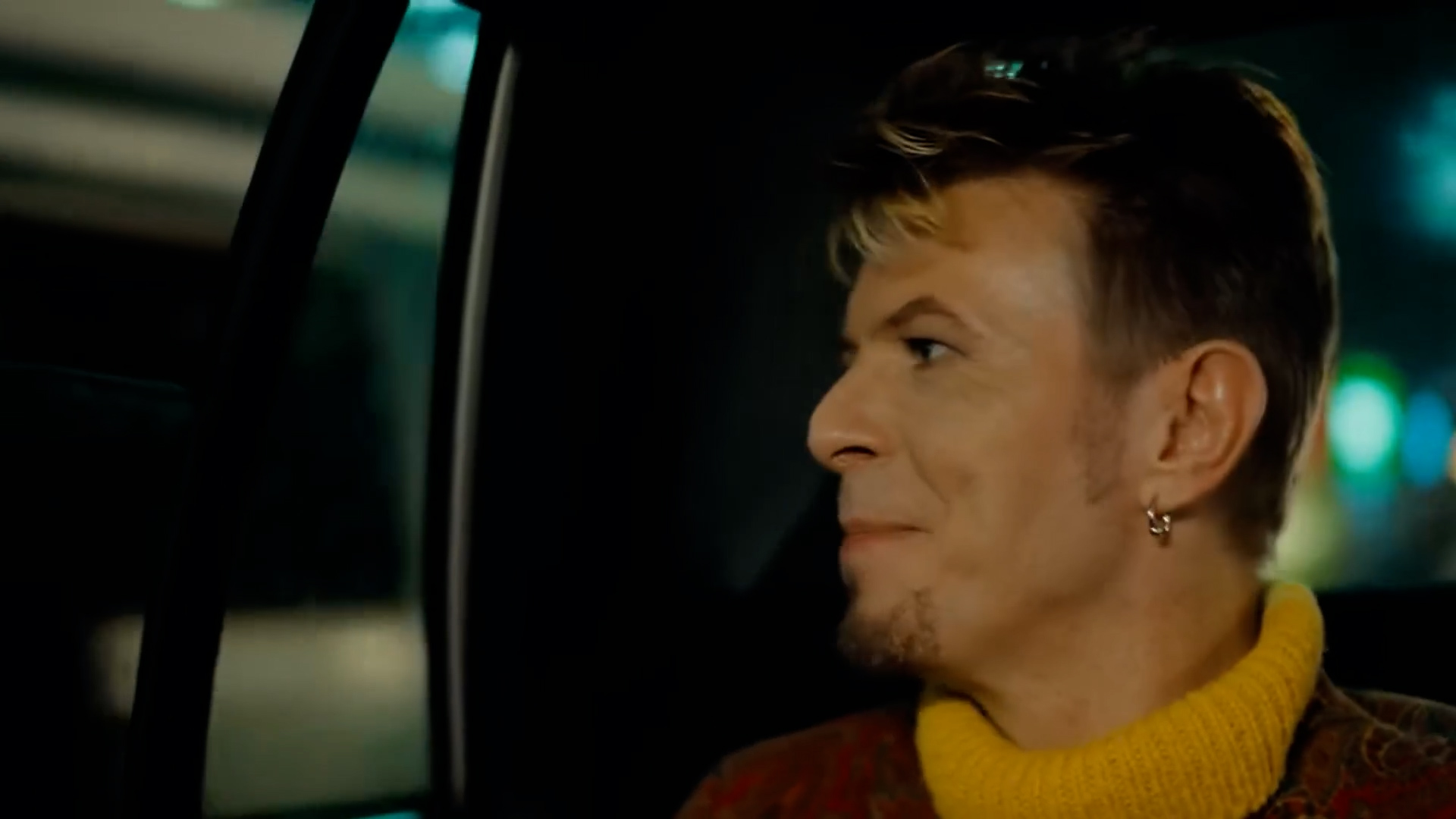
The taxi pulls over in a dark alley, and suddenly Reznor is outside the cab and looking at Bowie expectedly. Bowie exits the cab, never taking his eyes off of Reznor as he proceeds to shoot seemingly "real" holes in the cab with an imaginary assault rifle.
And then he's gone.
But Bowie's frightening adventure isn't quite over, because here comes a parade that wouldn't look out of place at Burning Man, and Reznor is right there with him, bearing a giant wooden cross while the priest from earlier silently weeps.
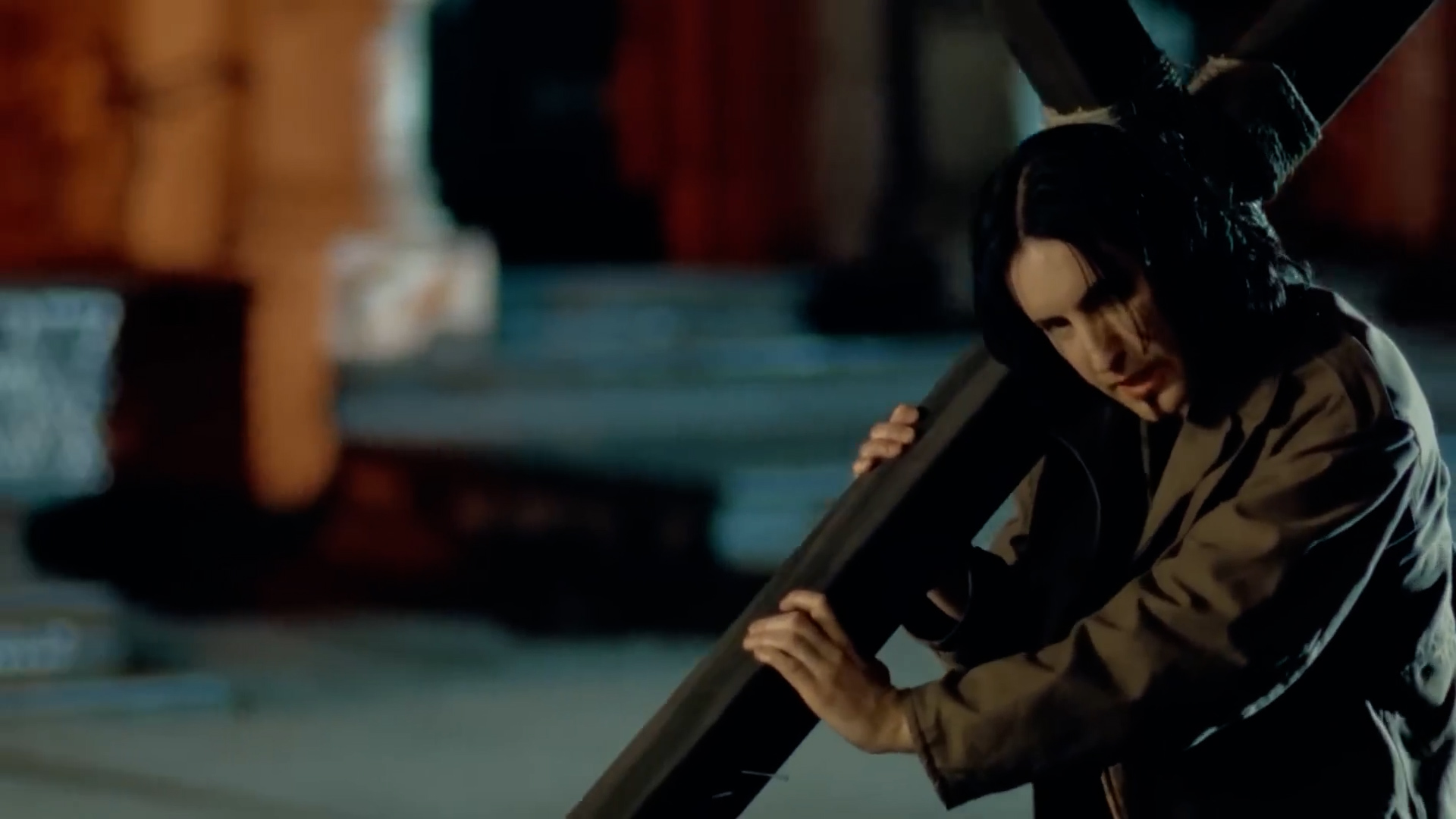
Bowie is an unreliable narrator in this tale, unable to trust his senses and plagued by a vague sense of dread made manifest in the form of a well-dressed hobo. What's important to take in is the fact that he doesn't hallucinate monsters, he hallucinates intent. Every glance is hostile, every passerby becomes a latent threat. And yet, nothing of significance actually happens.
This mirrors the anxiety we held in the post-Cold War, right at the dawn of information globalization, when we all felt a sort of ambient fear that couldn't be pinned down to any specific villain or enemy. This fear turned inwards, as people began to mistrust each other by default, rather than greeting them with open heart and arms.
Bowie's outfit - which I could talk about for hours if given the chance - is doing a lot of narrative work here, as is Reznor's. Bowie is well put together, clinging to taste, order, and intentionality in a world that feels like it is slipping into chaos.
By contrast, Reznor's clothing is blank, utilitarian, and aggressively unstyled. He's a template onto which Bowie applies his fears. He may have not existed at all.
The song itself works on multiple levels. On the surface, it really is a fear of America, of imperial and cultural dominance. And as I alluded to, it's also about Americans distrusting one another. But what I think may be less discussed in analyses of this video is the fear of oneself. The taxi scene isn't a twist, it's a revelation. Bowie interrogates himself, seeking safety, and discovers the thing he's running from has been steering the whole time.
As the song draws to a close, we hear the refrain, "God is an American". On the surface, this sounds like a cheap, provocative throwaway line, but upon closer examination, I feel it may be the crux of the entire production. It's not ironic, it's liturgical, a mantra chanted over distorted procession, evoking nationalism as a religion, power as divinity, and America as a metaphysical force.
In the end, I feel this video pair is really about projection under systemic pressure. It's what we do with our fear and paranoia when it doesn't have a healthy outlet. If we try to gloss over the flaws with a shiny veneer, the cracks will begin to show eventually.